The challenge
Distrocuyo is an energy substation management company that aims to manage its own assets and those of third parties through a multi-device platform.
At the time of joining this project, the asset directory was conceived as an abstract idea, so it was vitally important to capitalize on the concepts in a tangible product that would meet the high standards of the industry.
Our challenges:
- Balance and manage assets
- Digitize document content
- Make information accessible in real time
- Have direct connection with government coordinators
- Standardize the use of inspection sheets
My role
Within a multidisciplinary team, my position was hybrid as it comprised executing visual design and user experience tasks in parallel such as interviews, workshops, wireframes, mockups and interactive prototypes. For this reason I had direct contact with end users, managers, project directors, front-end and back-end developers and even business analysts.
Design Process
From physical assets to clones in the cloud
Many companies have physical assets, but the aim here was to generate an identical replica in the cloud in which we could emulate processes and executions that would not affect power generation in the actual world until the moment the user approved it. Thus, we began by analyzing the behavior of inspectors and regulatory entities both in the field and in offices or documentation. We test each phase with stakeholders and iterate based on their feedback to identify the mindset of consumers and how they approach each of the tasks on the platform.
Research
Taking Research Learning Spiral as a method, we recommend objectives of the project divided into sprints as achievable and measurable goals and based on them; we offer hypotheses of practices, needs, journeys, scenarios or emotions.
Having as a starting point the hypotheses, we ran surveys to verify the impressions and scenarios, remote co-design sessions to confirm the scenarios or needs and as intermediate points, both remote and face-to-face user testings to contrast behaviors, attitudes and the way of relating to the application and the work environment.
Deliverables: Brainstorming videos, competitive analysis, survey reports, workshop documentation, the core service analysis, the actual service analysis, the augmented service analysis, compelling insights, rainbow charts, storyboards, sketches.
Definition
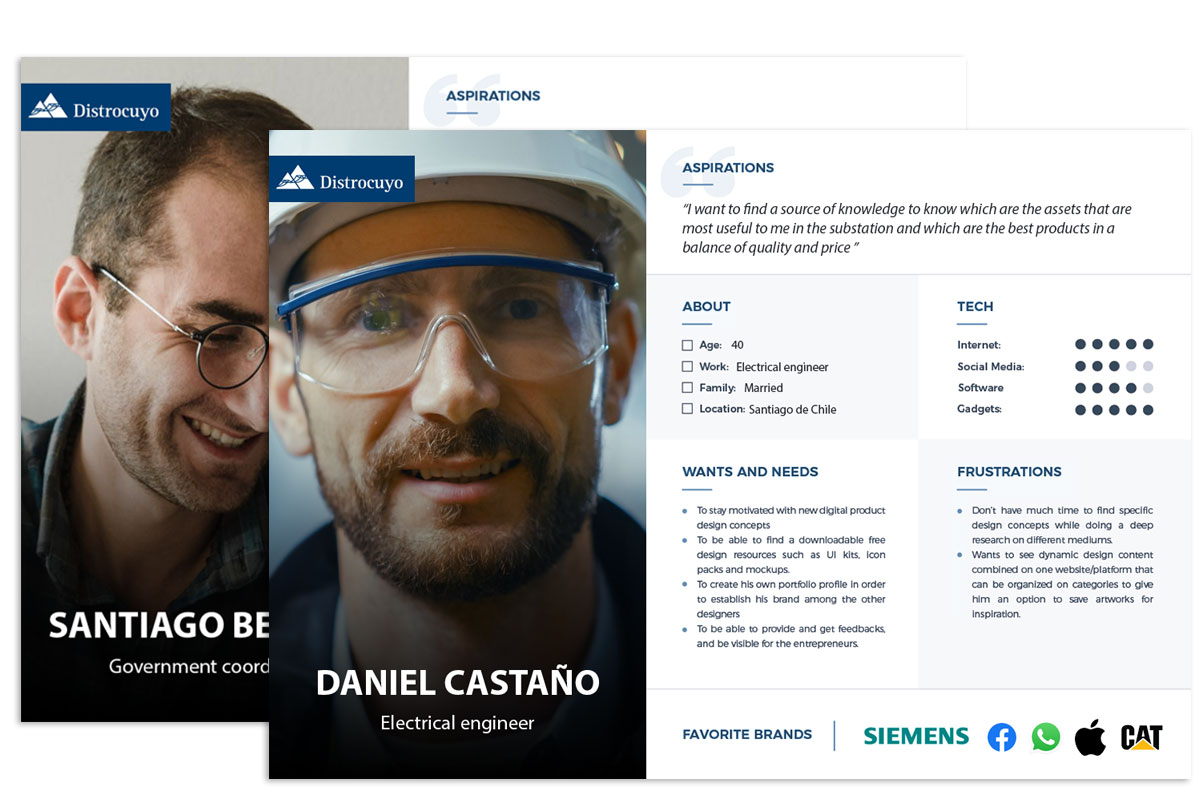
In order to focus on what consumers were really interested in, we defined user profiles related to the roles they play in the company equivalent to management roles reflected in user personas. We mapped each role in journey maps in which we found contact points that were not being optimized until that moment, so we defined golden paths inside and outside the platform to provide a global service that included the back office and the application as a whole.
Deliverables: Screen flows, sitemaps, user personas, journey maps, information architecture, user stories, golden paths.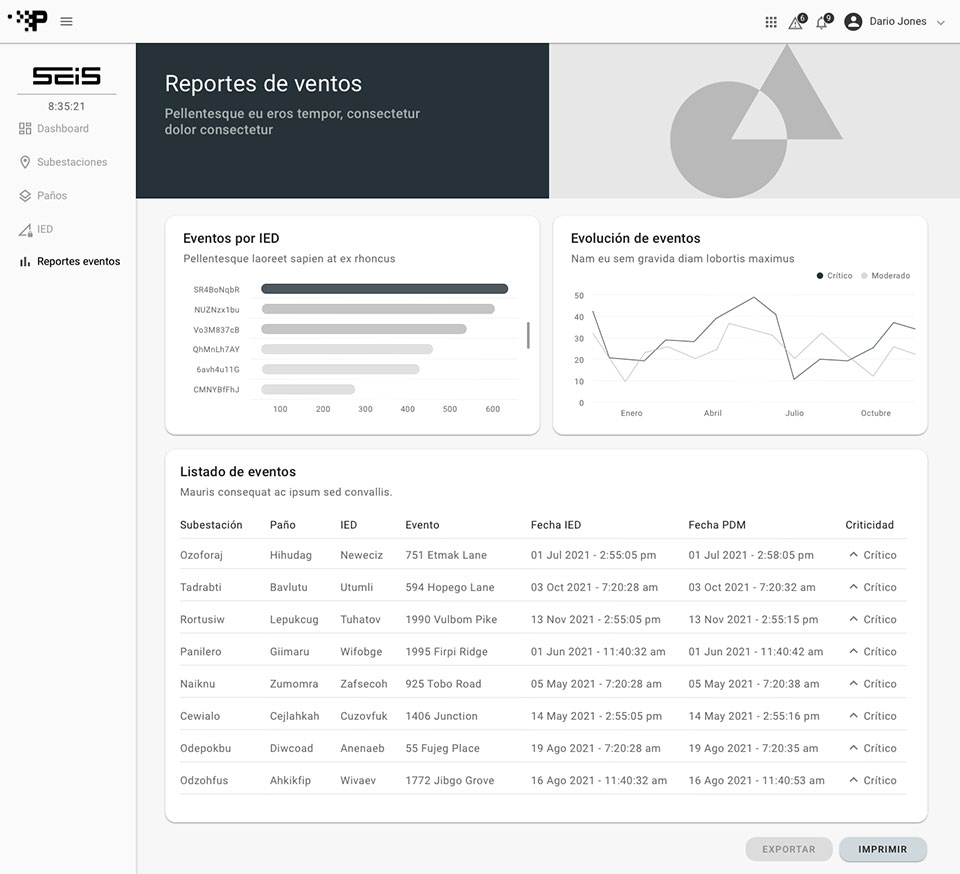
Prototype
We have created interactive prototypes of multiple versions of the platform, at different times in the product increment, going through handmade paper prototypes, prototypes on mockups with a high level of visual design or prototypes on low-fidelity wireframes, all of them adapted to the final device in which the app could be used later.
Deliverables: Sketches, paper prototypes. wireframes, low-fidelity design, interactive prototypes, WOZ mockups.
Design
In this stage we generate the visualization and alignment of the brand with each of the interface elements through a semantic design system that is transversal to all the products and applications attached to the platform.
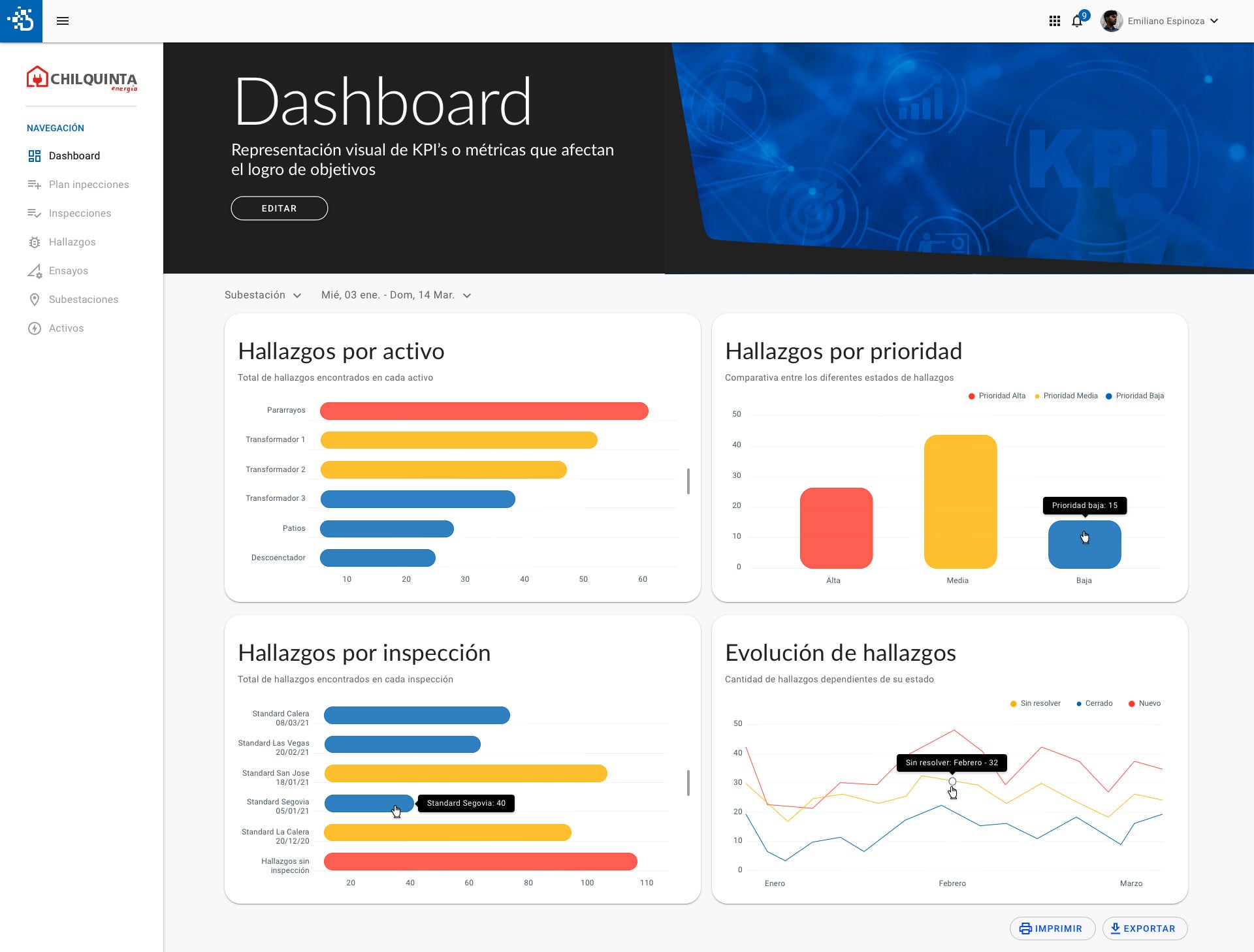
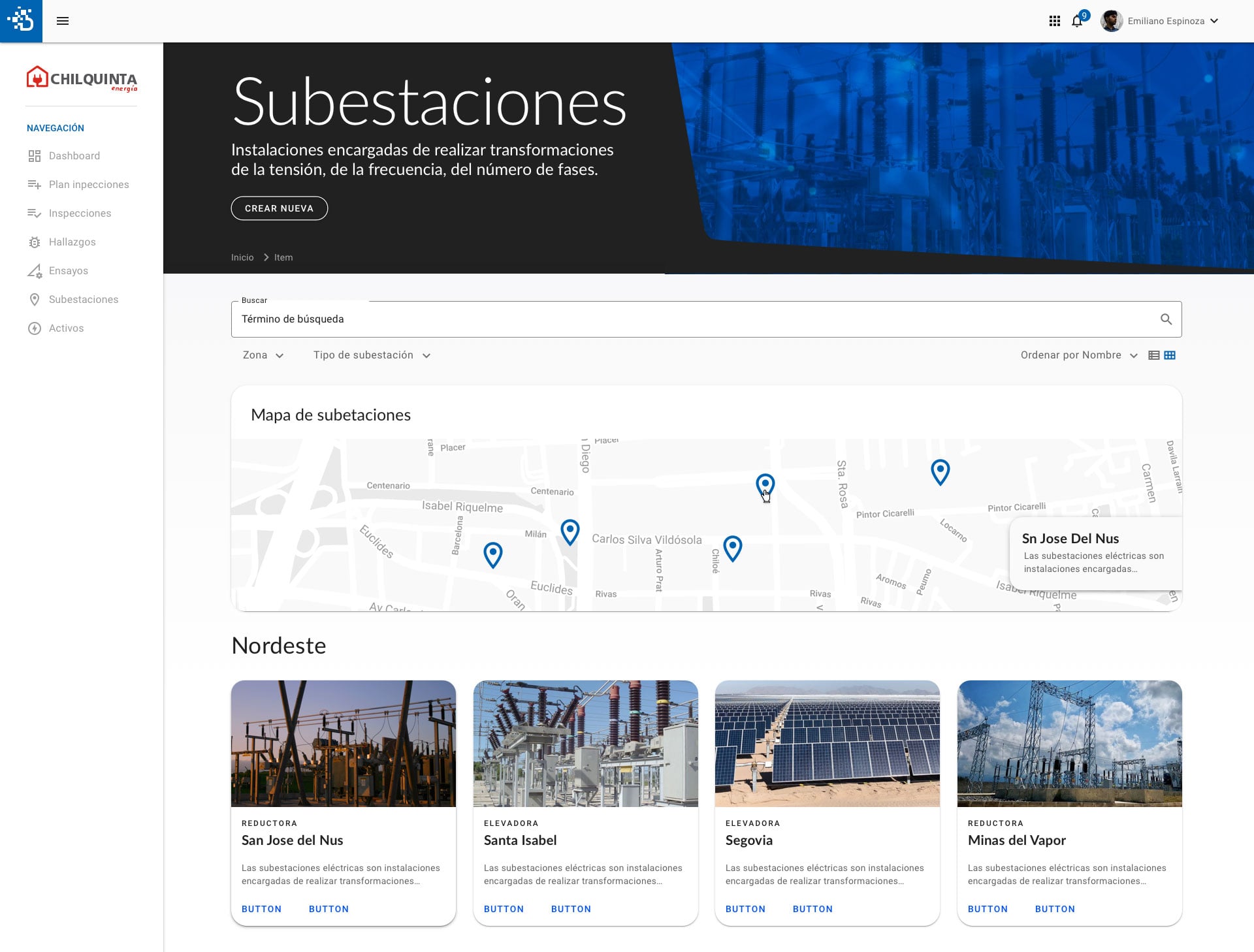
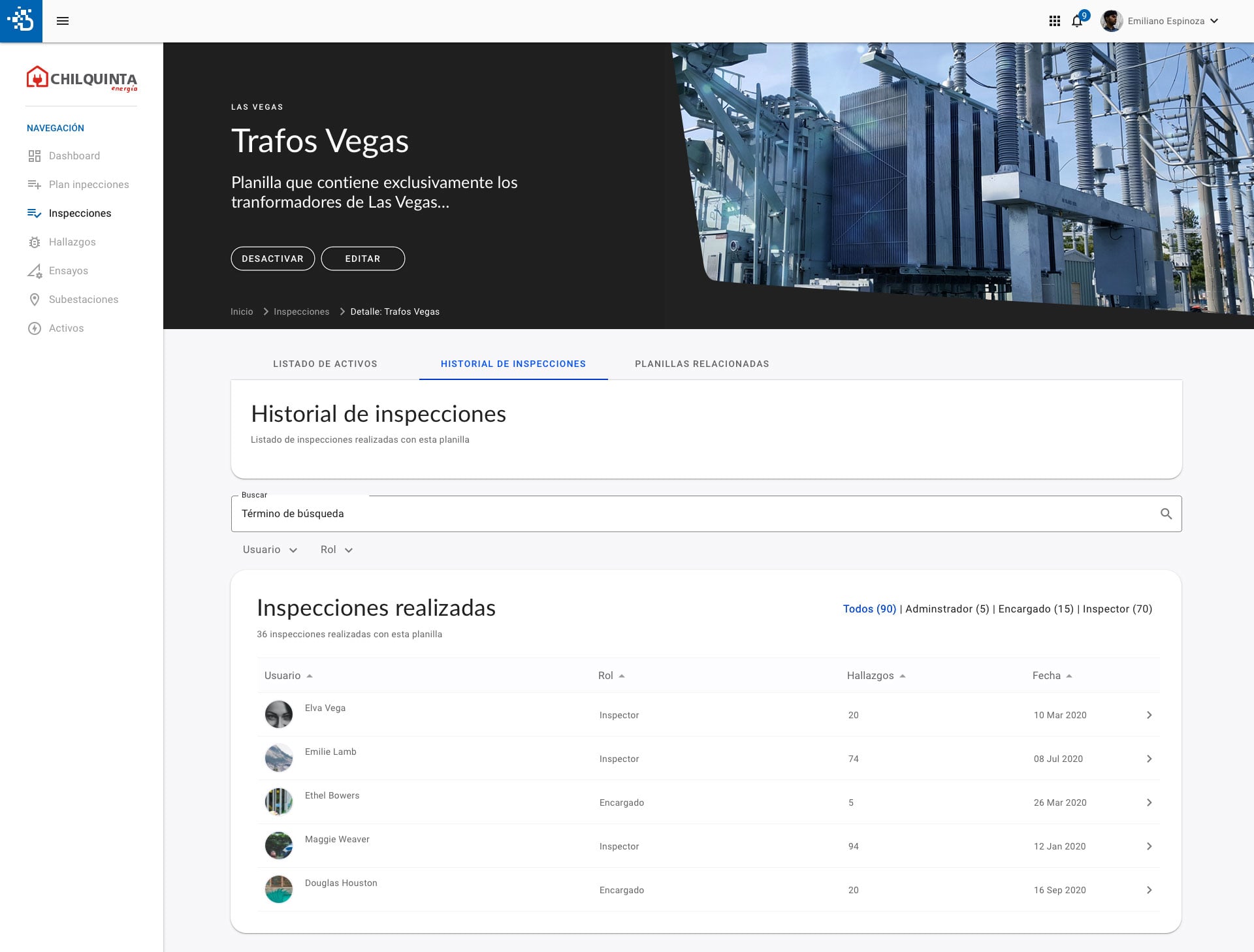
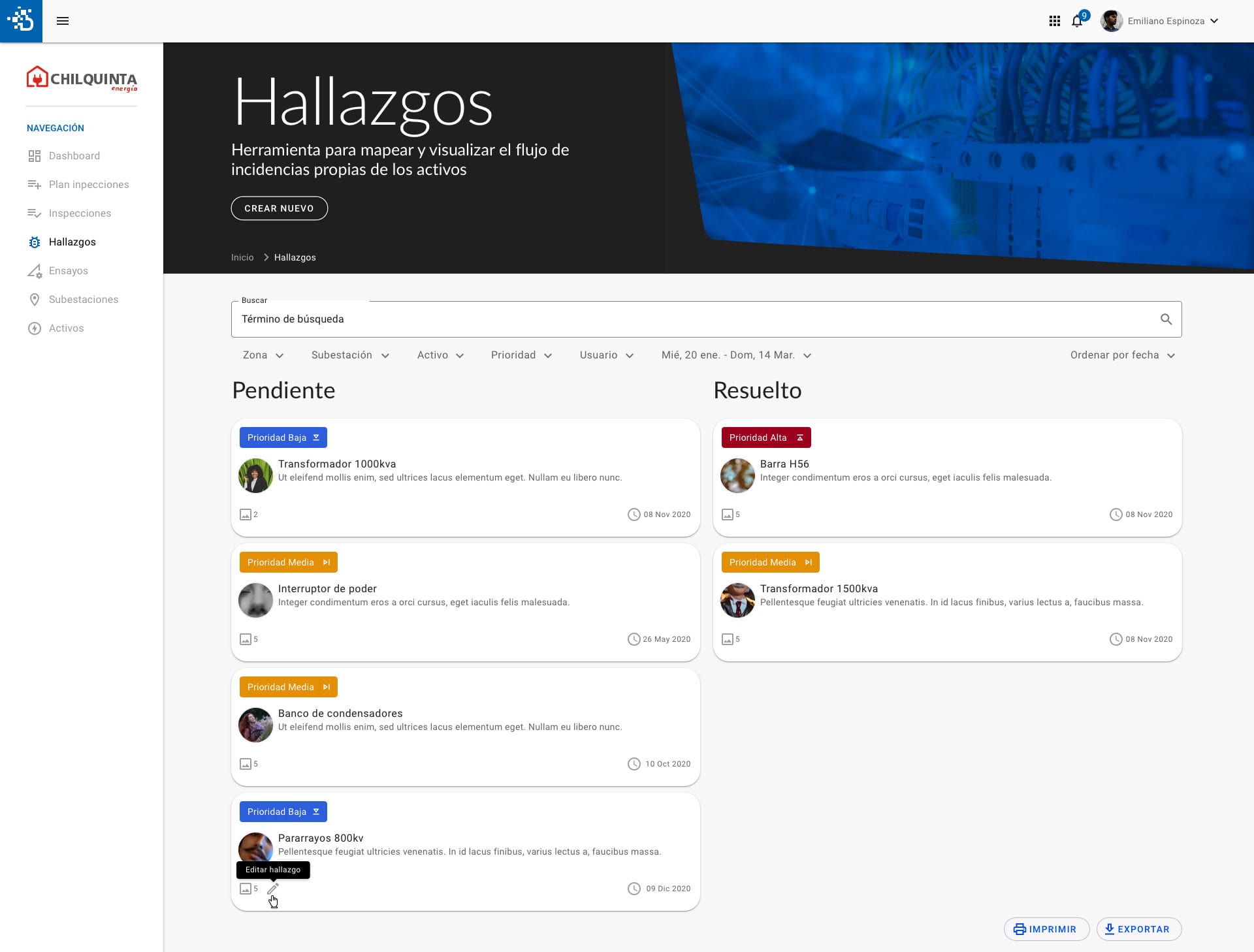
Based on the design system, we created the vital components in the application for all the devices that we would make available for the application, in this way, the high-fidelity designs were made. We linked the mockup screens to create interactive prototypes, which we would use as input for user testing.
Deliverables: Moodboards, pattern library, high-fidelity design, interactive prototypes, design system
Front-End
Some specific screens such as the result of an inspection, emailing structure, failure findings, tests or defects on substation assets required a coded version of the design. For this reason, I did some front-end tasks for the development team. It will use them as the foundation of the application. In parallel, I made a collection of design components that were used repeatedly on the platform in order to preserve consistency in each of the sections, not only in aesthetics but also in the way they should inject the code.
Deliverables: Pattern library, Sass, Pug, HTML, sliced structure, images
Test & Measure
All stages of the project were validated with stakeholders and iterated with the purpose of delivering value to users and the company in each sprint or product increment.
We carry out quantitative surveys to evaluate the sensations and subjective position of the respondents; we analyze the behavior of users on models regarding the density of clicks and movements on the platform.
On interactive prototypes, we assigned tasks to be executed using the think-aloud technique, these sessions were recorded and studied, yielding both quantitative and qualitative results on which we decided to improve usability
Deliverables: Task flows results, informational reports, quantitative surveys analysis, heuristics, accessibility results, scrollmaps, clickmaps.
Results
26
Interviews
34
Usability Tests
13
Iterations
75
Artboards
Learnings
At present, almost any object uses electricity and any connection network such as the internet, but this is not the case in power generation. Many assets cost thousands of dollars, but they do not consider an internet connection, no matter how sophisticated it may be. For this reason, it was an enormous challenge to digitize concepts within a sector accustomed to using pencil and paper for most daily tasks.
The energy industry is so important in our daily lives and requires a technological revolution and being open to making mistakes. Errors in this industry are seen as a failure in planning rather than execution, for this reason a user experience process that encompasses the entire service provided to third parties must be executed flawlessly. Diplomacy and soft skills in this project were fundamental because the way of working is very bureaucratic, so each process must be scaled and for the same reason a contribution that we must make to them is the vision of agility, otherwise any project can become endless.
Due to the fact that the evolution in the manufacture and design of structures changes hardly, the digital transformation is a gigantic opportunity and contributing to Distrocuyo in becoming references and leaders was a great project in terms of scalability, service, measurement of a state little worked by the design guild.